

![]() |
![]() |
![]() |
![]() |
|
![]() |
|
By Michael Tobias and Jane Morrison
A Dancing Star Foundation Book
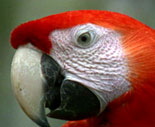
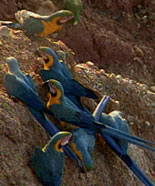
Cockatoos and true parrots, the psittaciformes, or psittacines, are among the longest-lived "citizens" of the wilderness and are among the most colorful, intelligent, dignified and mesmerizing of all creatures. They are also Threatened and Endangered in most parts of their geographic distributions.
Many years in the making, Parrot is the authors' deeply personal testament to that wide- ranging Order of birds, the psittaciformes. The gorgeously illustrated book takes the reader throughout the history of ornithology as concerns these glorious species, and shares remarkable moments of communication, insight and reciprocity that the authors (having lived most of their lives in the company of parrots) have experienced.
Utilizing rare illustrative material from many of the scarcest ornithological collections in the world, the authors also take the reader onto several expeditions in New Zealand, South America, West Africa, and parts of Central and Southeast Asia, in search – not necessarily of the rarest - but the most provocative of psittacines, as well as investigating the early histories of two now-extinct parrots that inhabited the United States, and at ill-fated attempt at reintroductions.
Filled with personal anecdote, observation, and intoxicating science, Parrot examines CITES and other legislative policies to suggest large ecosystem protections for these birds, particularly in an era of pro-active global warming strategies; and seeks to extend the animal protection awareness that has gained leverage with Great Apes and marine mammals, to the psittaciformes. In so doing, the book acknowledges explicitly that these birds co-exist cognitively with mammals, and that their intelligence may often, in fact, outstrip our own.
With unabashed lyricism, this book is sure to stir up in readers the restless flight feathers that reside in our souls.

![]() |
|
![]() |
|
By Michael Tobias and Jane Morrison
A Dancing Star Foundation Book
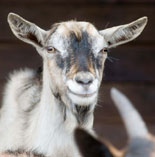
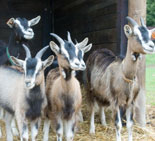
Descended from C. aegagrus in Central Asia, this most ancient of domesticated species, the Goat, or Capra hircus, is found at high altitude, on glaciers, along marine coastlines, and in the Sahara. In other words, goats have traveled the world with the same free spirited biological wanderlust as humans. And their expressions, personalities, and vast behavioral varieties reflect this primeval journey.
Goats have figured in a myriad of classics: from the Bible to Chaucer, from the Renaissance pastoralist tradition, to the great illustrators of Aesop, La Fontaine, the Georgics and the many Arcadias.
Goats, like donkeys, are also exploited for their milk, their meat and their hair, and are often as beloved a companion animal as dogs. In this joyful, wide-ranging examination of the mystique of goats, from their appearance in Shakespeare's "Tempest" to their role in the tribal societies of Asia and Africa; Goat: The Mystique of Capra Hircus will provide insights into one of the world's most adored, whimsical and independent of creatures.
![]() |
|
![]() |
|
![]() |
|
Hugh Lofting
By Michael Tobias and Jane Morrison
A Dancing Star Foundation Book
Throughout the world, the name Doctor Dolittle resonates for its celebration of the child's pristine imagination, interspecies communication and empathy, brilliant storytelling and a human geography peopled by persons of all persuasions: Polynesia the Parrot, Chee-Chee the Monkey, Too-Too the Owl, Jip the Dog, Dab-Dab the Duck and Gub-Gub the Pig, among many others.
In late 2009, Dancing Star Foundation will be bringing out, with Council Oak Books, a major study on the life, ethics and imagination of Hugh Lofting, the extraordinary creator of Doctor Dolittle. Lofting was a political activist, poet, literary genius, and loving father to all the children of the world, not least of which, his own. His son, Christopher Lofting, in exquisite reminiscences, recalls many vivid details of his father and of the Dolittle legacy, while other literary creations that swirl around that legacy are configured into a context which will place Lofting in a unique artistic sphere that is at once environmental, humane, forward thinking and deeply personal.
The World of Dr. Dolittle will be lavishly illustrated by manuscript details, artwork, and photographs of actual locations where Lofting lived and wrote. In many respects, he was the John Muir of animal rights; the Rachel Carson of environmental education. And he accomplished these feats without so much as a single decree, act of legislation, or protest march. He did it through the sheer love and drama that is the childhood imagination; elevating the purity and innocence of the child's encounter with nature into a global truth that is felt not just by kids, but by the tens-of-millions of youthful readers during the nearly 90 years since The Story of Doctor Dolittle (followed by its numerous sequels) was first published.
![]() |
|
![]() |
|
Conservation and the History of Idealism
Written by Michael Tobias and Jane Morrison
A Dancing Star Foundation Book
A Dancing Star Foundation Book This lean book will present in spare words and revealing images from ecosystems around the world the fragile but tenacious balance that exists between human ethical idealism and the sacred presence and interdependency of all life on earth.
![]() |
||
Photo © Robert Radin |
||
Ed. by Professor Thanasis Maskaleris
Photographs by Jane Gray Morrison and Michael Tobias
Introduction by Michael Tobias - A Dancing Star Foundation/Zorba Press English Ebook Edition To be Published first in Greek by the N. Kazantzakis Publishers, Athens, 2010 and then as an Ebook.
The book will combine an original lengthy introduction by Tobias, two dozen photographs - of what is wondrous and magical about the earth, and what humans being are doing to it - with a few hundred pages of select quotations (translated and annotated by Professor Maskaleris) from the vast constellation of Kazantzakis's more than fifty published novels, plays, translations, essays and epics.
By Peter Kreitler, Jane Gray Morrison and Michael Tobias
For 2011.
This gorgeous small color hardbound book will integrate Kreitler's remarkable collection of American flags, entitled “1777” (the year the first U.S. flag was made - an exhibition that has been displayed at the Smithsonian Institution with an approximately 100 page essay by the co-authors. The book examines what it means in this day and age to be a true environmental citizen; to effect meaningful change within the distinctive borders of micro-management (as the Dalai Lama has described it). This portends of ecological housekeeping, the origins of the Greek word for ecology, and suggests that our ability to keep house, to take care of one another, of all species, habitat and landscapes, is true citizenship, true patriotism.
The flag - a fragile reminder of community united by purpose and loyalty - transcends all politics and renders patriotism forcefully and poignantly ecological. This will be a radical, avant garde portrayal of a world in environmental crisis, where only true ecological loyalty to the world, to personhood for every sentient being, can hope to solve problems that now clearly transcend all boundaries, political alliances, even treaties. We are at the turning point and it may well be that a symbol as gentle as a flag fluttering in the wind may become the tuning fork, the beacon in the night that can rally the needed wake-up call.